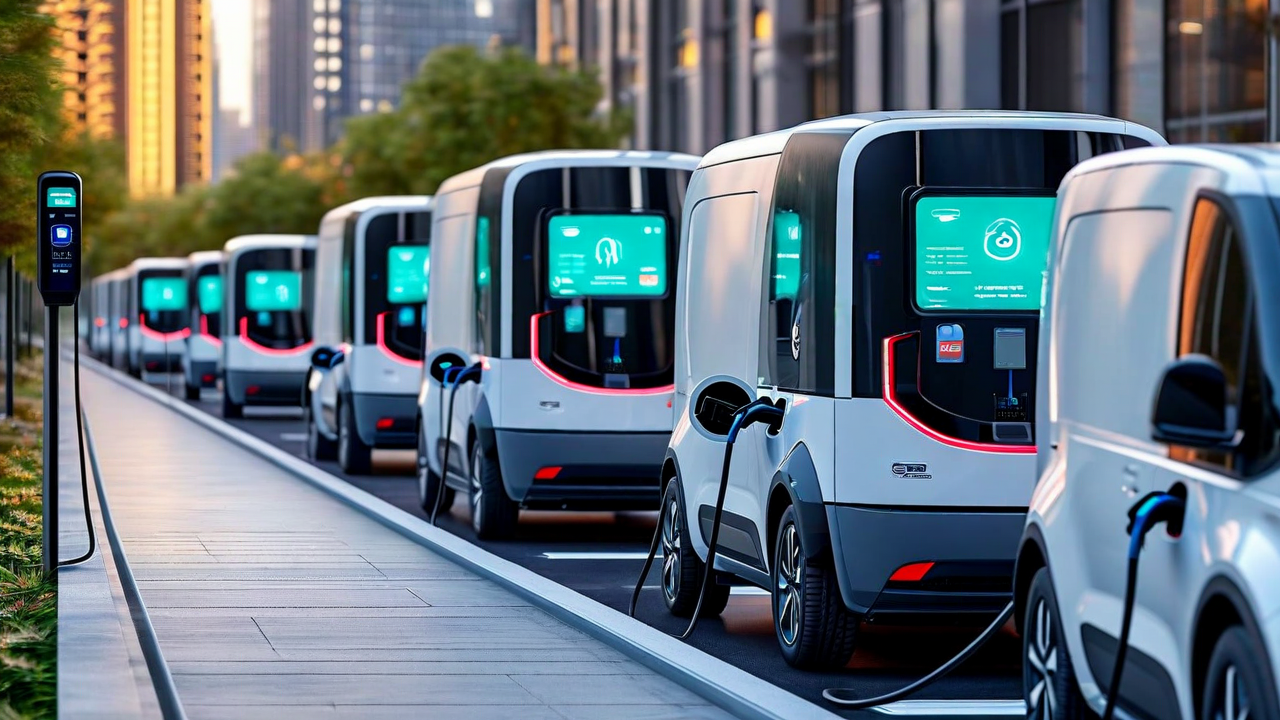
Fleet operators switching to electric vehicles are discovering that the routing software they used for diesel vans does not translate cleanly. The variables are different. The constraints are different. And the failure modes - a van that runs out of charge in the middle of a route - are far more disruptive than a low-fuel warning you can address at the next gas station.
This is not an argument against EV fleets. The economics are improving quickly, especially in California where diesel and gas prices are high and state incentive programs reduce acquisition costs significantly. But the operational transition requires routing infrastructure that was designed for EV constraints, not retrofitted from ICE assumptions.
Range Is Not Just Distance
The first mistake operators make when planning EV routes is treating range the same way they think about fuel - as a quantity that depletes predictably with distance. EV range is more complex. It varies with:
- Load weight. A van loaded with 600 lbs of packages at the start of a shift uses significantly more energy per mile than the same van at the end of the route with 80 lbs remaining. Front-loading heavy stops wastes range.
- Elevation change. Routes with significant uphill segments in early stops can drain 15-25% more energy than flat routes of equivalent distance. LA's topography - the hills of Silver Lake, Echo Park, and the hills above Pasadena - creates meaningful range variance that does not exist for flat-city operators.
- Temperature. Cold mornings reduce battery capacity. LA winters are mild, but early-morning departures in January and February can reduce usable range by 8-12% on some vehicle models.
- Stop density. High stop-density routes with short drives between stops use more energy proportionally (frequent acceleration, more door-open events, HVAC cycling) than longer-haul routes with fewer stops.
Charging Window Integration
For routes that require a mid-shift charge, the charging stop needs to be treated as a delivery stop - it has a location, a duration, and a time window (most fleet operators want charging to happen between specific hours to manage grid costs and charger availability).
Routing software that does not model charging stops as route waypoints forces dispatchers to plan charging manually, which creates one of two problems: routes that do not account for charging time at all (driver ends up delayed or stranded), or routes padded with excessive buffer time to accommodate an estimated charge that may not take as long as planned.
We have seen both failure modes in operations that transitioned from ICE to EV without updating their routing approach. The average disruption cost per charging-related incident (driver delay, missed deliveries, rescheduling) in those operations was $87. At even a few incidents per week, that adds up quickly.
What Good EV Route Optimization Looks Like
The routing engine needs to know each vehicle's current state of charge at dispatch, its real-world range under load, the locations and charging speeds of available charging stations on or near the route, and the time cost of a charge stop at each. From that input, it can build routes that either complete within range or include a strategically placed charge stop that minimizes time loss.
A few specific behaviors matter:
- Heavy stops early. Sequencing heavier stops earlier in the route - when the van is most loaded - reduces total energy consumption because the vehicle has less weight for the back half of the route when energy per mile matters most.
- Charge stops near dense stop clusters. If a charge stop is necessary, position it between a high-density area and a lower-density area so the driver maximizes productive time before charging and does not lose time driving out of the way to a charger.
- Conservative range buffers. Route plans should target returning to depot with at least 15-20% charge remaining. Running vehicles down to 5% creates anxiety, adds wear on batteries, and turns any unexpected delay into a potential stranding event.
The Transition Timeline
California's commercial vehicle regulations are creating a definite transition timeline for urban delivery fleets. Operators who start building EV-ready routing infrastructure now - while EVs still represent 15-30% of their fleet - will be significantly better positioned when that number hits 60-80% over the next three to five years.
The dispatch workflows, charging schedules, and routing logic that work for a mixed fleet are already different from pure-ICE operations. Starting the transition at lower EV percentages means lower stakes when the learning curve is steepest.
EV-Ready Routing for Your Fleet
DeliverLoop handles mixed EV and ICE fleets, with range modeling, charging stop integration, and load-aware sequencing built in. Book a demo to see how EV route planning works in practice.
Book a Free Demo